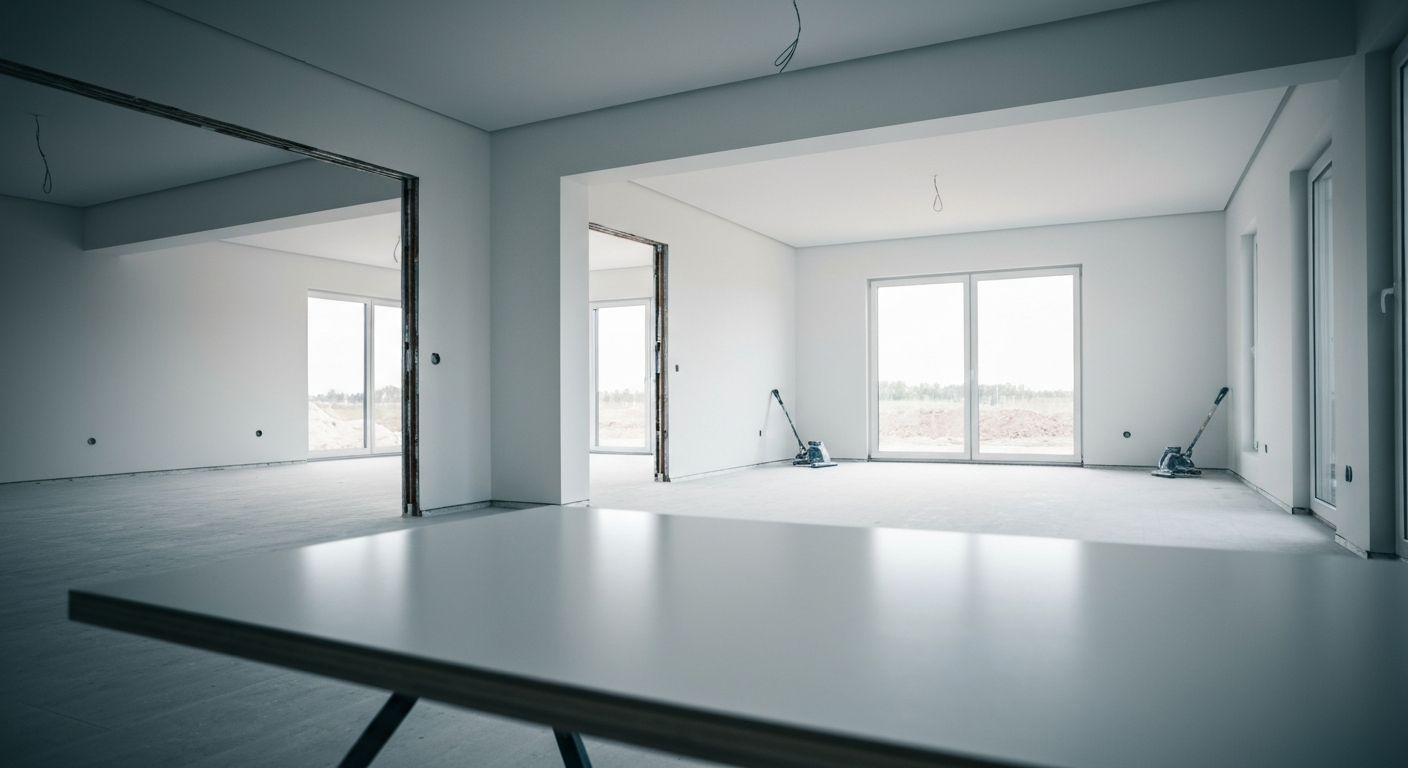
Why Drywall Dust Requires Different Equipment and a Different Process
Table of Contents
Why Drywall Dust Is Not Regular Dust
Your renovation is done. The drywall is up, the seams are taped, the finish coats are sanded, and the walls look great. There is also a fine white coating on every horizontal surface in the property - countertops, door frames, cabinet shelves, HVAC registers, and the top surfaces of the baseboard trim that nobody pays attention to in an occupied home.
Most people assume this is the same dust that settles in any room over time: particles you can vacuum up with a shop vac and wipe off with a damp cloth. It is not. Drywall sanding dust has different physical characteristics than household dust, behaves differently when you try to remove it, and requires specific equipment and a specific sequence to actually clear from the property. Getting that process wrong - in terms of equipment, products, or order of operations - does not produce a slightly worse result. It produces a result where you have to do the whole job again, and the second time is harder than the first.
What Drywall Compound Is Actually Made Of
Standard drywall joint compound is gypsum-based. The active material is calcium sulfate dihydrate, a mineral processed into the powder that gets mixed with water to form the compound used for taping, bedding, and finishing drywall seams. When that compound dries and gets sanded, it produces particles across a wide size range.
The large particles - anything above 10 microns in diameter - settle quickly and visibly. They are what you see on the floor immediately after a sanding session: the powdery white residue that sweeps up without much effort. These particles are not the problem.
The particles below 10 microns are the problem. Fine gypsum particles in the 1-to-5 micron range stay airborne for extended periods - several hours after active sanding stops - and settle on every horizontal surface in any space with air movement. In a property with an air handler running during the drywall finishing phase, fine gypsum particles will be present on surfaces in rooms where no sanding happened at all. The particles are small enough to be carried by normal air circulation before they settle, which means the contamination is not confined to the room where the work happened.
Why a Standard Vacuum Makes the Situation Worse
The most common equipment used in a DIY post-construction cleanup is a shop vac. The logic is sound on the surface: the floor is covered in white dust, a shop vac has suction, suction removes dust. For large visible particles, this is correct. For fine gypsum particles below 10 microns, a standard shop vac does not capture them. It exhausts them back into the room.
True HEPA filtration is rated to capture 99.97% of airborne particles at 0.3 microns. Consumer vacuum filters, including many models marketed with "HEPA" on the label, are tested and rated to a different standard. Most consumer-grade HEPA-labeled filters do not hold the 99.97% threshold for fine particulate in the 1-to-5 micron range. When a standard shop vac runs across a floor with fine drywall dust, the suction picks up the large visible material and the exhaust port recirculates the fine particulate back into the room air. Those fine particles then resettle on every horizontal surface - including the floor you just vacuumed.
The practical result: you spend an hour vacuuming and achieve nothing on the fine particle load. The floor looks cleaner because the large visible particles are gone. Every surface above floor level still carries the fine gypsum coating. Commercial-grade HEPA vacuums used in professional post-construction cleaning meet the 99.97% threshold at 0.3 microns. They capture fine gypsum particles rather than recirculating them. This is not an equipment preference. It is the difference between clearing the contamination and moving it around.
The Wipe-First Mistake That Doubles Your Work
After the wrong vacuum, the second most common DIY error in post-construction cleanup is wiping surfaces before HEPA vacuuming. The thought process is reasonable: the countertop is visibly dusty, a damp cloth removes visible material, wipe the countertop. What actually happens is different.
Drywall compound is gypsum-based, and gypsum is water-soluble. When a damp cloth contacts a surface carrying fine drywall dust, the moisture activates the gypsum. The dry particulate becomes a thin slurry. The cloth spreads that slurry across the surface rather than lifting it off. When the slurry dries, it leaves behind a harder residue bonded to the surface - harder than the original dry particulate and more resistant to a follow-up wipe attempt.
Every surface wiped before HEPA vacuuming requires a second cleaning pass. The second pass on a surface with dried gypsum slurry takes more time and more product than a correctly sequenced first pass would have taken. The correct order is dry HEPA capture first on every surface, then wet surface decontamination using appropriate products for each material type. This sequence is not optional. It determines whether you clean the surface once or twice.
Where Drywall Dust Actually Settles
The visible accumulation on floors and countertops is the easy part. The locations where fine gypsum particles settle out of normal standing eye-line are where post-construction cleanup is most often incomplete - and where the evidence of an incomplete clean surfaces first during an occupancy inspection, buyer walkthrough, or tenant move-in.
- HVAC return registersAir handlers running during construction pull fine particles into return registers. The register face collects visible dust. The interior of the duct opening collects heavier debris.
- Cabinet box topsThe top surface of the uppermost cabinet box is above standing eye-line and gets no attention in routine cleaning. Fine particles settle there throughout construction.
- Drawer interiorsCabinet drawers present during construction accumulate fine particulate inside the drawer box. Wiping cabinet exteriors without removing each drawer leaves contamination inside.
- Door frame interiorsThe face of a door frame that faces the rough framing behind the drywall accumulates dust along its full length. It is consistently missed in post-construction cleanup attempts.
- Window track channelsWindow tracks are horizontal channels that collect fine particulate. Cleaning the glass without detail-cleaning the tracks leaves visible residue when the window is opened.
- Light fixture housingsThe interior of a recessed or pendant fixture housing collects fine particulate during construction. It is visible when the light is on and viewed from below at an angle.
- Top surfaces of door casings and baseboardsThese surfaces are horizontal and collect fine particulate. They are below normal eye-line when looked at straight on, making them easy to miss.
The Correct Removal Sequence
Given the particle behavior, the failure modes of standard equipment, and the deposition locations above, the correct sequence for removing drywall dust from a post-construction property is:
- True HEPA commercial vacuum, ceiling to floor, room by room. Vacuum ceiling-height surfaces - tops of door frames, cabinet box tops, HVAC register faces - before moving to mid-height surfaces. Running ceiling-to-floor prevents particles from landing on already-vacuumed surfaces below.
- Remove and vacuum all drawers individually. Cabinet drawer interiors are not accessible through a cabinet face wipe. Remove each drawer, HEPA vacuum the interior of the drawer and the drawer box cavity, then replace and wipe the face.
- Address HVAC registers. Remove register covers, clear debris from the accessible duct opening, wipe the register face, and reinstall.
- Check all above-eye-level horizontal surfaces. Physically look up and confirm the top of every cabinet box, door casing, and any horizontal ledge before moving to the next room.
- Surface decontamination after HEPA vacuum is complete. Wet cleaning follows dry capture. Product selection is matched to each surface type - stone, vinyl, painted drywall, glass, and hardwood each require a different product.
- Final detail pass. After full-room surface decontamination, re-check the locations listed in Step 4. Fine particles continue to settle during the cleaning process as surfaces above are disturbed.
When DIY Cleanup Is Realistic
For a single-room renovation with limited scope - a bathroom refresh with new tile and a vanity swap, a paint-only update with no drywall work - and where the HVAC was not running during the work, the particle load is lower and the affected area is contained. A thorough vacuum using a quality true-HEPA machine, careful surface attention, and a ceiling-to-floor sequence may produce a complete result.
For any project involving drywall sanding, for any property where an air handler was running during construction, or for any property being prepared for listing photography, occupancy inspection, or tenant move-in with a firm date, the contamination level and the consequences of an incomplete clean are both high enough that the full process above applies.
The limiting factor in DIY post-construction cleanup at scale is rarely effort. It is equipment - specifically the difference between a consumer vacuum and a commercial HEPA unit - and product knowledge for surface-specific decontamination. Getting those wrong does not produce a slightly inferior result. It produces surface damage or an incomplete clean that shows up exactly when it cannot be corrected quickly.
Sparkling Ventures LLC handles post-construction cleaning for new builds, full remodels, investment property flips, and renovation turnover projects across Denver Metro Area.
For a complete breakdown of scope, phases, and pricing, see our post-construction cleaning service.